

Driving Innovation in Diagnostic Imaging: A Biomedical Scientist’s Perspective of Molecular Imaging Advances in Cork
May 26th, 2025
Having spent decades working in and managing clinical laboratories—and later, overseeing operations and managing a public hospital—I’ve witnessed the evolving landscape of diagnostics from multiple angles. Working with Alliance Medical Diagnostic Imaging since April 2018, I’m proud to be part of a service that directly supports the diagnosis and monitoring of some of Ireland’s most vulnerable patients.
The increasing integration of PET/CT scanning technology into patient care is one of the most significant and welcome advancements I’ve seen in this field. PET/CT scans combine anatomical detail from CT with the metabolic insights of PET, offering a powerful tool for clinicians diagnosing and managing cancers, cardiac disease, and neurological disorders.
Alliance Medical Diagnostic Imaging has delivered PET imaging in Cork University Hospital (CUH) since 2012. The PET CT department supports over 2,500 patients annually across the south of Ireland and beyond in their healthcare journey. Since commencement the service has grown from delivery of fludeoxyglucose-18 (FDG), the standard PET radiotracer for detecting cancer and evaluating brain function to include targeted tracers. The team have made remarkable strides, but it’s not just about numbers—it’s about positive impact on patients’ lives.
Take prostate cancer, for instance—the most common cancer in men in Ireland. One in 8 men will be affected by the disease and over 3,500 men are diagnosed with prostate cancer every year. Thanks to the introduction of 18F-PSMA-1007 PET CT scanning in CUH men of the region no longer have to travel abroad for this critical imaging. PET CT using 18F PSMA is a diagnostic tool used to restage prostate cancer patients who present with biochemical failure post treatment. This tracer provides sharper, more accurate detection of metastatic spread, particularly in the pelvis, and its production method means we can scale access more efficiently across the region. This is meaningful progress for patients and clinicians alike.
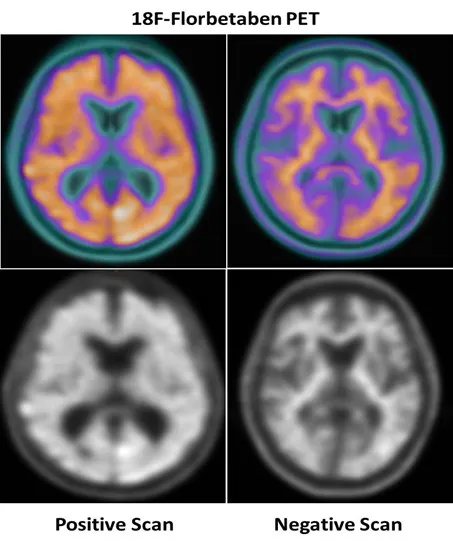
More recently, the PET/CT department in CUH reached another milestone: the delivery of Florbetaben (FBB) PET CT scans for patients being assessed for Alzheimer’s disease (AD) and related dementias. In conjunction with clinical evaluation, a positive scan can support a diagnosis of AD which can be of great benefit to clinicians, patients and their families. A negative scan which indicates sparse or no plaques, is not consistent with a diagnosis of AD and is useful for differential diagnosis. The service has been introduced by the PET CT Team in CUH which includes, Clinical Director and Consultant Radiologist Prof Kevin O’Regan, Neuroradiologist Dr David Ryan, PET CT Clinical Specialist Radiographer Catherine Gell and PET/CT & MRI Unit Manager Peter Murphy.
Being able to support neurologists in the complex journey toward a diagnosis of Alzheimer’s with greater certainty is something I find both humbling and deeply motivating. As a biomedical scientist, I’ve always believed in the power of diagnostics to transform lives. However, it’s only through collaboration—between clinical teams, radiologists, radiographers, and technologists—that we can truly bring the science to life for the benefit of patients.
The work being done at CUH is a testament to that spirit. I’m proud to stand beside this team as they continue to innovate and expand access to world-class diagnostic imaging right here in Ireland.
Maria Godley, Alliance Medical Regional Director (South)